Outdoor 360° Photography: When Do You Need a Drone?
The exterior is part of every tour. But when is a drone really necessary, and when is it an unnecessary expense? Legal permits and practical limits.
Use the buttons below to get an AI summary of this article.
Outdoor 360° Photography: When Do You Need a Drone?
When people think of a virtual tour, they think of interiors, but the first frame of a tour is almost always the outside. The reason is simple: customers first want to know they have come to the right place.
In this article, we explain how an outdoor shoot is planned and when a drone is really necessary.
Why does the exterior matter?
The exterior scene does three jobs at once:
- Recognition: customers recognize the building from the street
- Location confirmation: the feeling of "I am at the right address"
- Context: the surroundings, parking, entrance, and accessibility for people with disabilities
Almost every tour in our archive includes the exterior as a scene. This is also a fixed item in the scene count; we explain the logic in our virtual tour pricing guide.
When is a ground-level shoot enough?
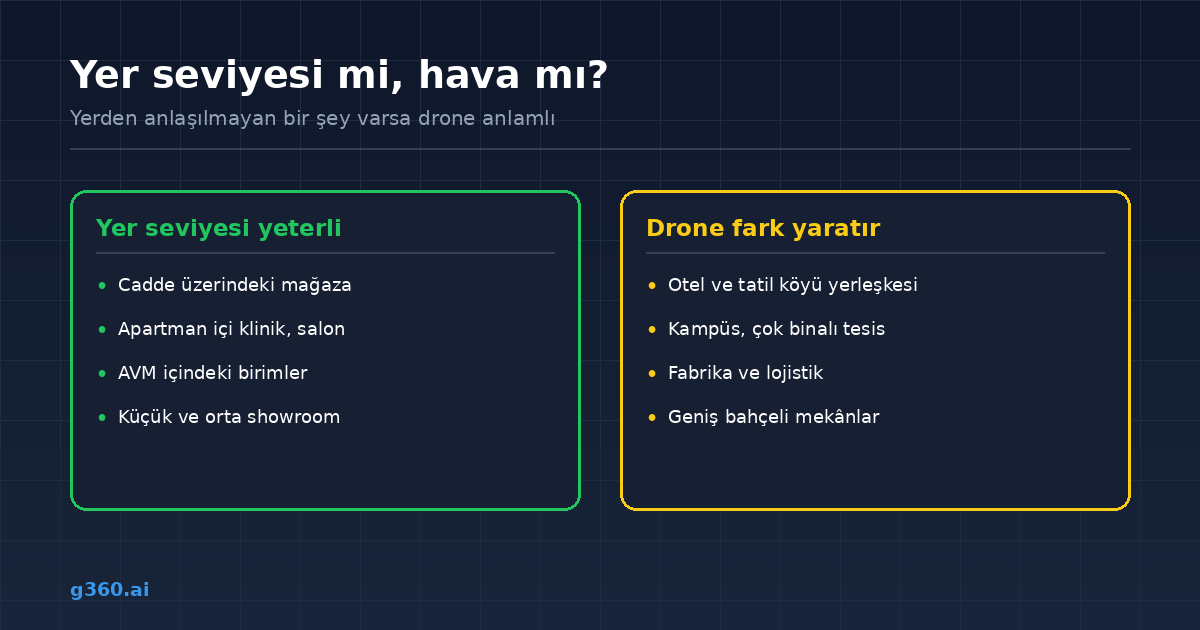
For most businesses, it is enough. You do not need a drone in these cases:
- Street-front stores, cafes, and restaurants
- Single-story clinics, salons, and offices, or those inside an apartment building
- Units inside a shopping mall
- Small and mid-sized showrooms
In these venues, customers are not looking for a bird's-eye view; they are looking for the door. A good exterior scene shot from ground level does the job.
Most of our archive falls into this category: 486 restaurants, 202 cafes, 125 stores, 32 beauty salons. Almost none of them needed aerial shots.
When does a drone make a difference?
The cases where aerial shots truly add value are few but clear:
- Hotel and resort grounds: the relationship between the pool, beach, and gardens only makes sense from above
- Campuses: the position of buildings relative to each other
- Factories and logistics facilities: capacity and site size
- Venues with large gardens: outdoor wedding venues, restaurant gardens
- Projects under construction: a record of progress
What they have in common: a drone makes sense when there is a bigger picture that cannot be seen from the ground. Otherwise, you get a nice image, but it has no effect on the decision.
The legal framework in Turkey
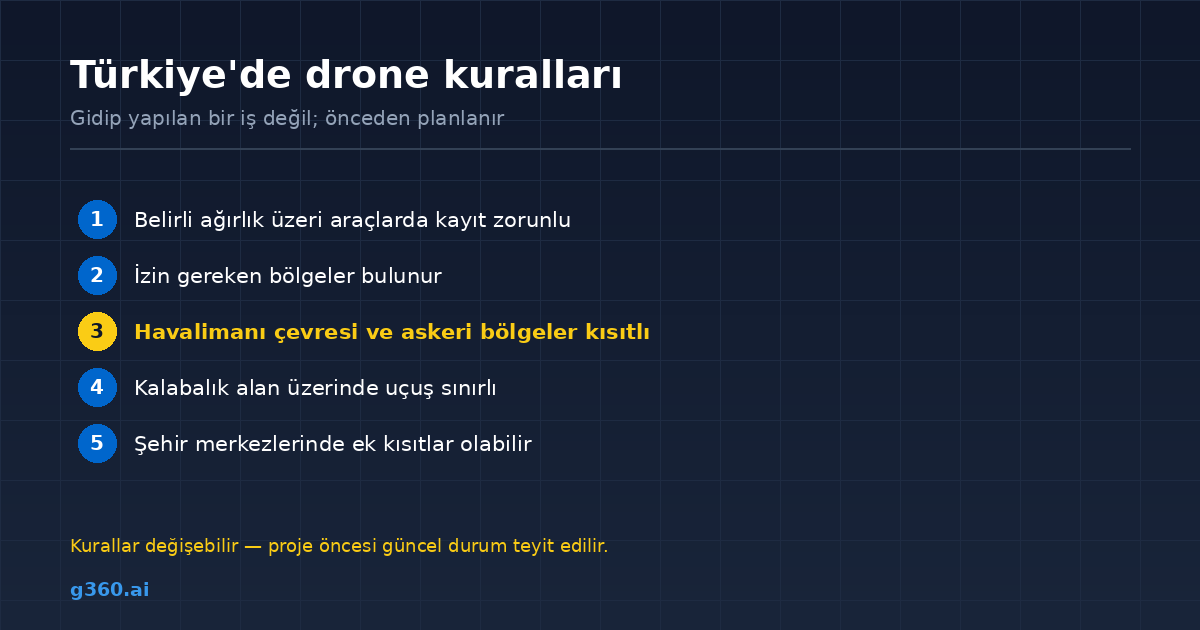
This is a topic you should not skip. In Turkey, the use of unmanned aerial vehicles is subject to the rules of the Directorate General of Civil Aviation:
- Drones above a certain weight must be registered
- There are zones where flying requires permission
- Areas around airports and military zones are restricted
- Flying over crowds is limited
- Additional restrictions may apply in city centers
That is why aerial photography is not a "show up and shoot" job like an interior shoot; it is a separate process that needs to be planned in advance, with the permit status checked.
Since the rules can change, the current situation should be confirmed before the project.
The weather factor
Unlike indoor shoots, outdoor shoots are weather-dependent:
- On cloudy days, colors come out flat and shadows look scattered
- Wind makes the image shake in aerial shots and creates risk
- Wet ground and raindrops ruin the lens
- Very bright midday sun creates harsh shadows on the facade
That is why we usually plan the outdoor shoot for a separate day. The interior shoot can be done regardless of the weather; the outdoor shoot waits for the right day.
The best results usually come between late morning and mid-afternoon.
How is an aerial scene added to the tour?
A 360° panorama taken from the air is added to the tour as a separate scene. Visitors can move from a ground-level point to the aerial view, and from there drop down to another part of the grounds.
One note: the "See inside" flow on Google Maps works with ground-level panoramas. Aerial scenes are usually used in the tour on the website and in promotional materials. We explain how the Google integration works in our article on showing your business interior on Google Maps.
Making the decision
Ask this question: Is there something that cannot be understood by looking from the ground?
- If the answer is "no, the building is on the street" → ground level is enough
- If the answer is "yes, there are three buildings and a garden" → aerial shots make sense
An unnecessary aerial shot makes a tour prettier but does not sell. Where it is needed, it tells in one frame what cannot be told from the ground.
Frequently Asked Questions
It is not required, but it is part of almost every project. The exterior helps customers recognize the venue from the street and confirm they have come to the right address.
No. For a single-story cafe or a street-front store, a ground-level shoot is enough. A drone makes sense for large grounds and multi-building facilities.
It makes a difference for hotel and resort grounds, campuses, factories and logistics facilities, venues with large gardens, and projects under construction.
Unmanned aerial vehicles above a certain weight need registration and flight permission. Areas around airports, military zones, and crowded areas are restricted. The rules are set by the Directorate General of Civil Aviation.
A 360° panorama taken from the air is added to the tour as a separate scene. Visitors can move from ground level to the aerial view.
No. Cloudy and windy weather lowers image quality and creates a safety risk for aerial shots. The outdoor shoot is usually planned for a separate day.
The exterior scene is priced using the standard scene logic. Aerial shots are assessed separately, since they require permits, equipment, and suitable weather.
Ground-level panoramas fit the Street View flow. Aerial scenes are usually used in the tour on the website and in promotional materials.
A Professional Virtual Tour for Your Business
Give your customers an unforgettable experience with a 360° virtual tour.
Get a Free Quote